
Customs Clearance FOR IMPORTS in South Africa.
Bringing goods into South Africa means navigating SARS import requirements, correct HS tariff classification, and duty/VAT liability — all before your cargo can legally leave the port or warehouse.
What's Involved in Clearing an Import
Import customs clearance is one of the most common points of failure for businesses new to importing, and even experienced importers can be caught out when a supplier changes a product specification without flagging it, shifting the correct tariff code without anyone noticing.
Getting the Tariff Code Right
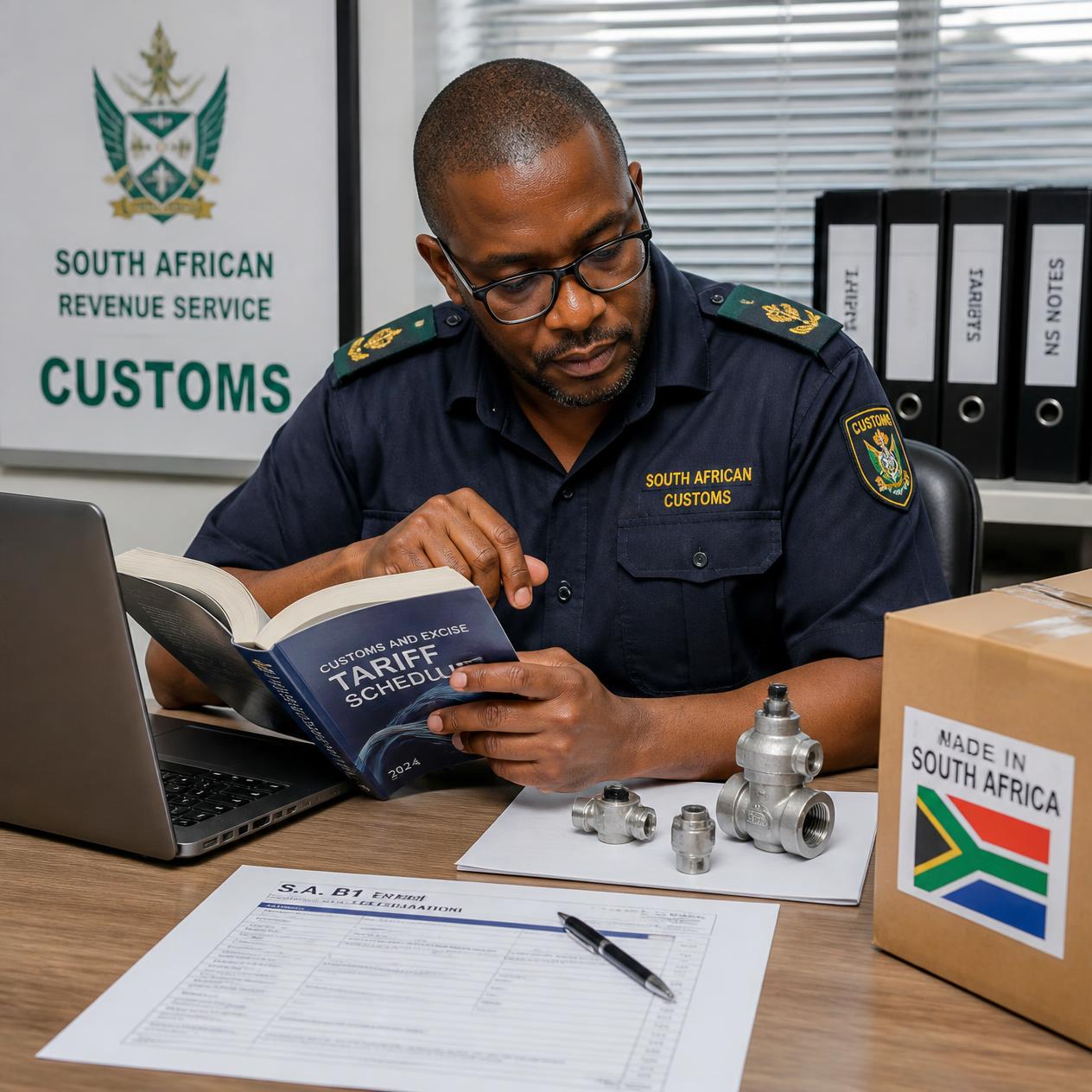
Every imported item must be classified under the Harmonized System (HS) code structure used by SARS. The tariff code determines the duty rate, VAT treatment, and whether any additional permits apply — getting it wrong at this first step cascades through the entire clearance process.
Correct Duty and VAT Calculation
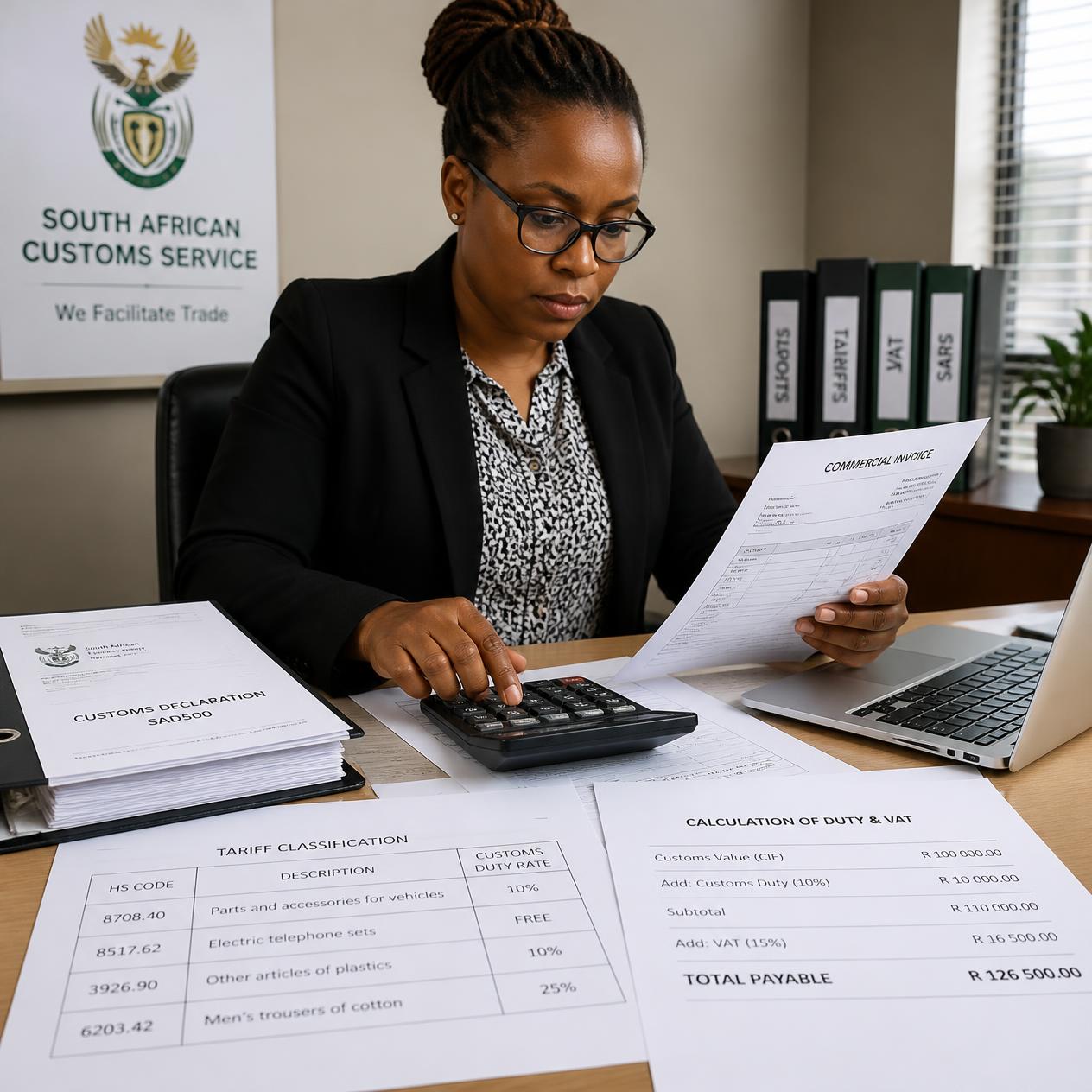
Duty and VAT liability is calculated based on customs value, country of origin, and applicable trade agreements, including SADC, AfCFTA, and the EU-SA Trade, Development and Cooperation Agreement. Preferential rates under these agreements can significantly reduce your landed cost, but only if the correct origin documentation is submitted alongside the declaration.
SARS Customs Declaration (SAD 500) Submission
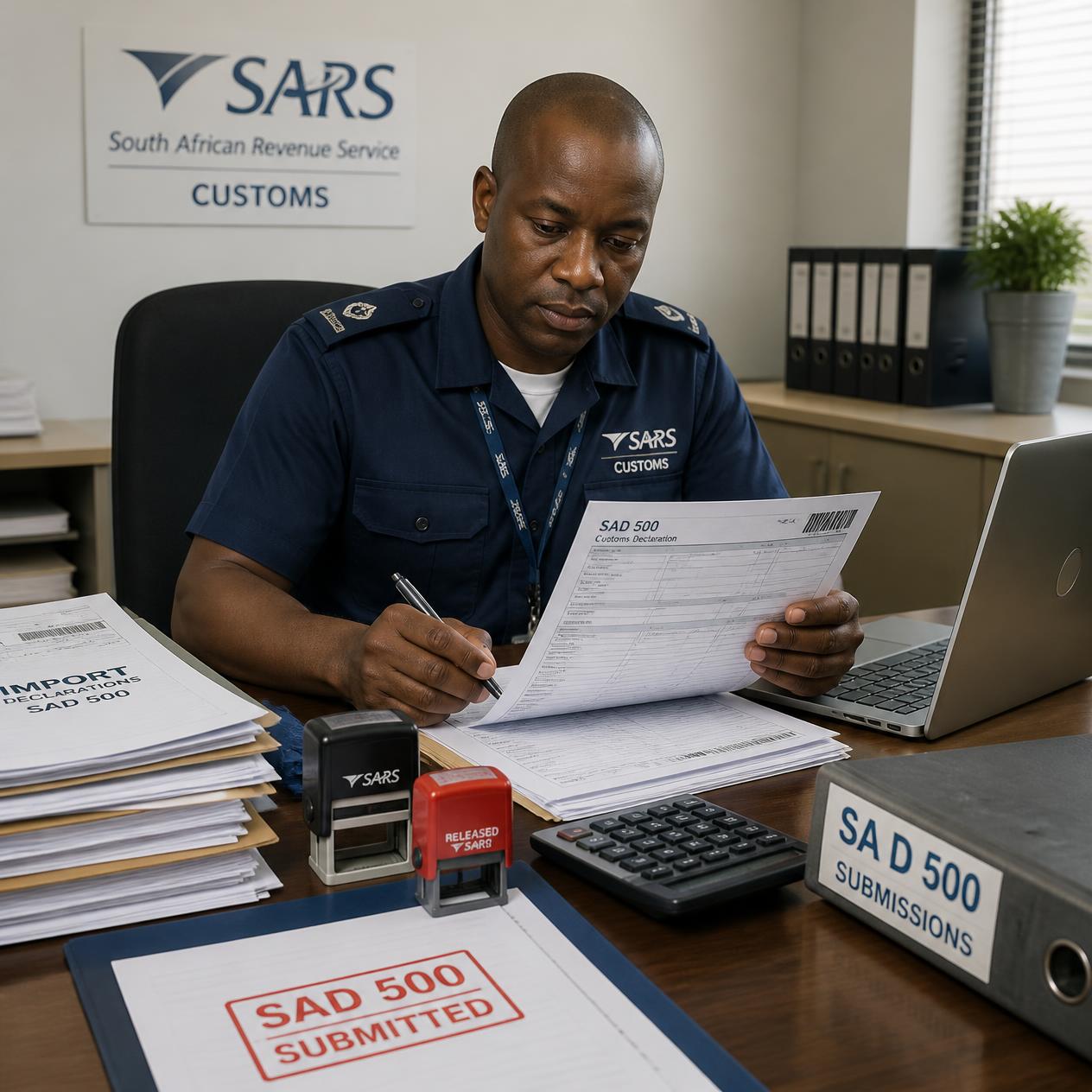
We prepare and submit your SAD 500 customs declaration via SARS eFiling, cross-checked against your commercial documents before submission to avoid the query-and-resubmit cycle that adds days to a clearance timeline.
Permit and Certificate Checks
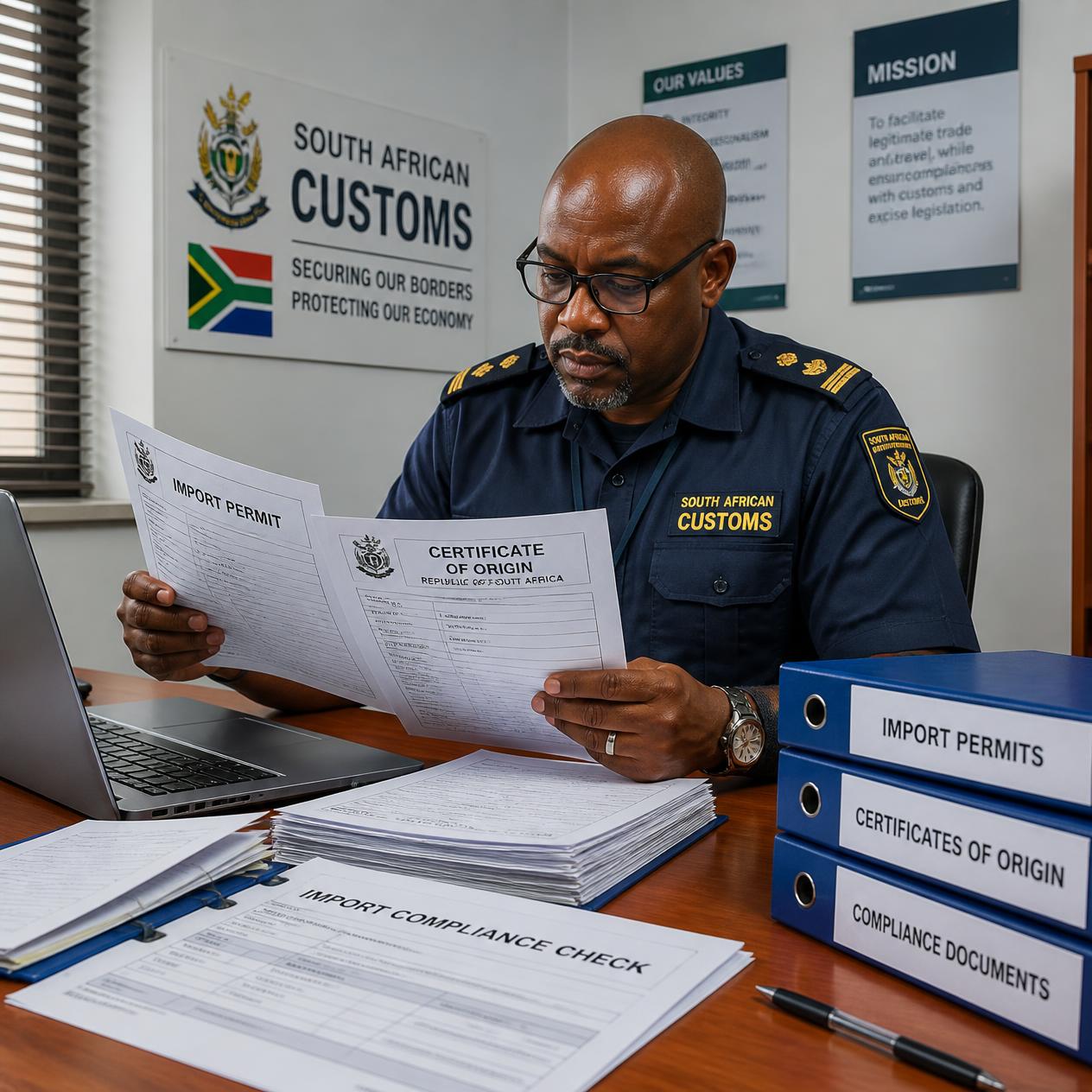
Controlled or restricted goods require additional clearance before a customs declaration can even be processed — ITAC import permits, NRCS letters of authority, and health certificates among them. We identify which of these apply to your shipment before it arrives, not after it's already sitting at port.
Bonded Warehouse Arrangements
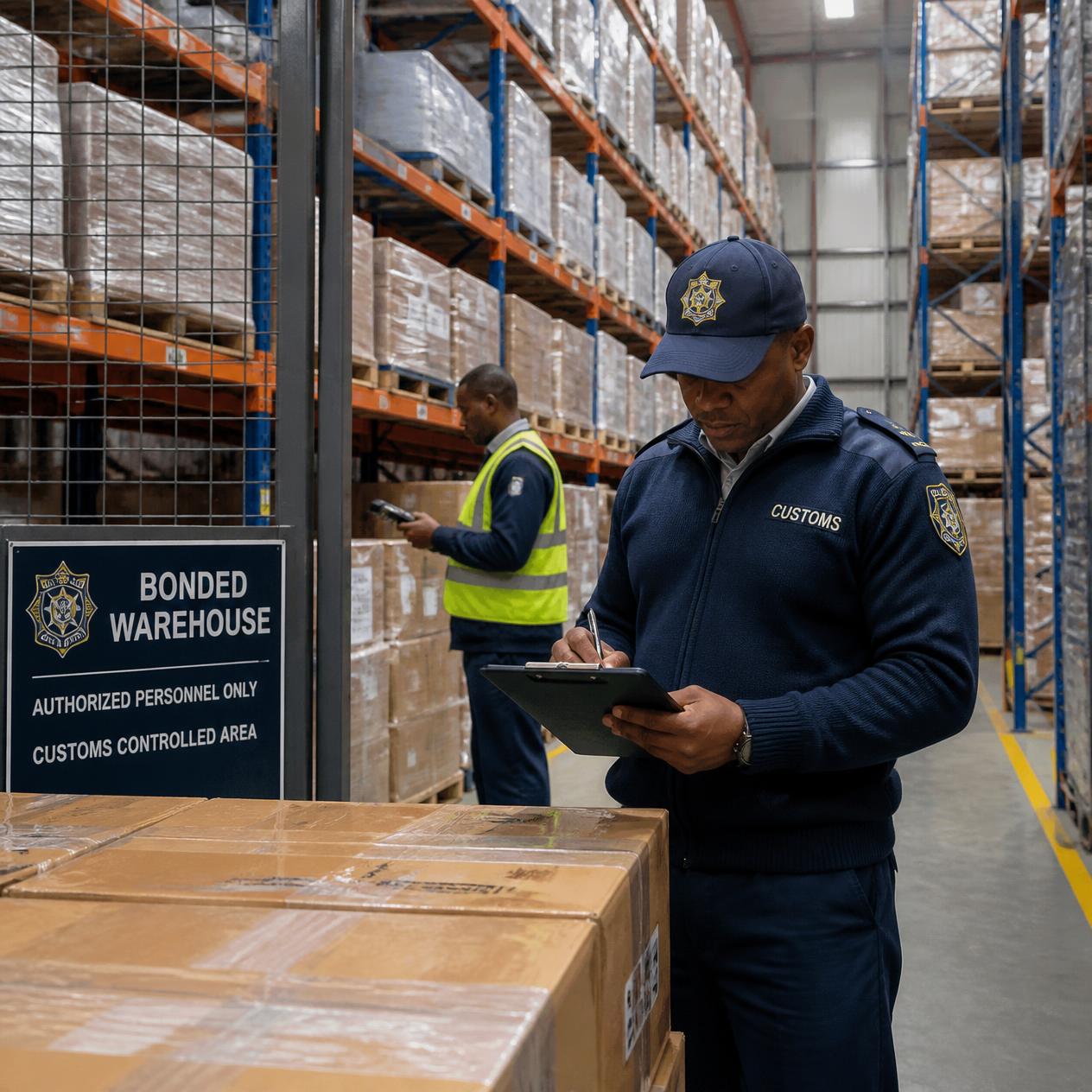
Where cash flow timing matters, bonded warehouse arrangements allow duty payment to be deferred until goods are released from the warehouse, rather than paid immediately on arrival.
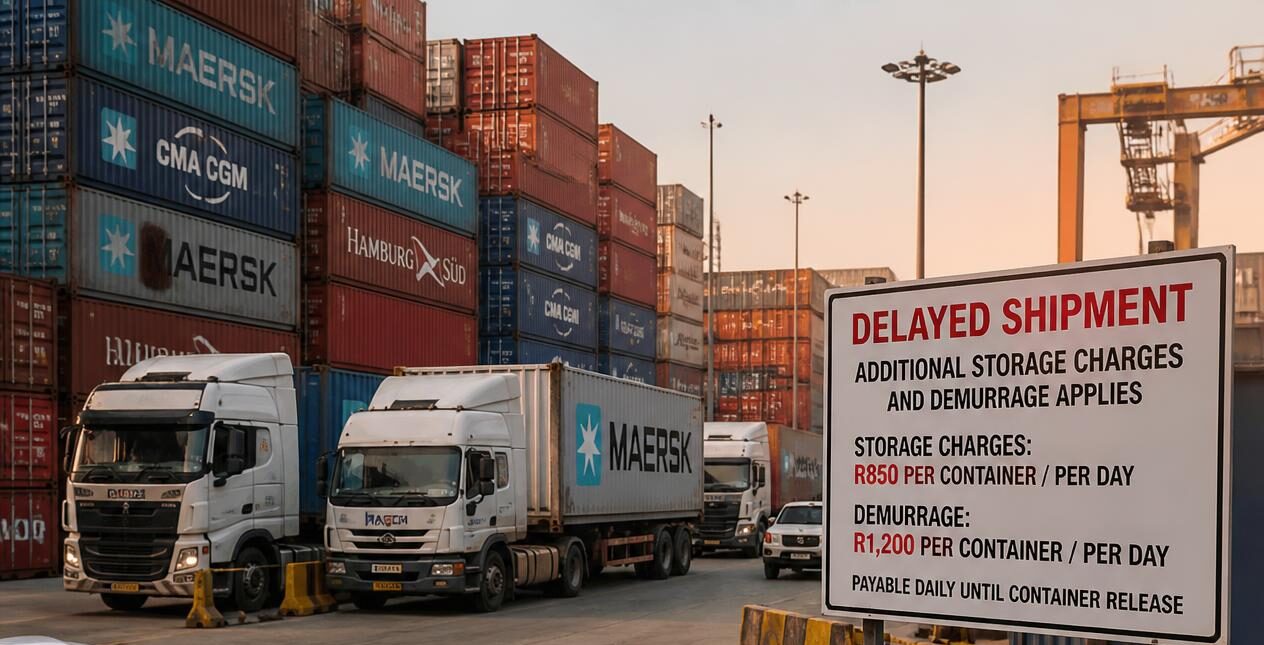
Why Import Shipments Get Held Up
Importers frequently lose days — sometimes weeks — to avoidable clearance errors: mismatched invoice values between the commercial invoice and the declared customs value, missing certificates of origin for shipments that should qualify for a preferential duty rate, or goods requiring an ITAC import permit that wasn't applied for far enough in advance.
We check all of this before your shipment arrives, not after it's already incurring storage charges.
We check all of this before your shipment arrives, not after it's already incurring storage charges.
Stopping the Same Delay From Happening Twice
If your business imports the same product lines repeatedly, we build a standing classification record for each SKU so tariff codes stay consistent shipment to shipment, removing one of the most common sources of recurring delay.
What Happens When Customs Clearance Imports Go Wrong
A rejected or queried customs declaration doesn't just cost time — it costs money in storage fees that accumulate daily while the shipment sits at the terminal awaiting resubmission.
Most import customs clearance queries trace back to one of three causes: a tariff code that doesn't match the product description on the commercial invoice, a customs value that doesn't reconcile with the payment terms stated on the invoice, or a required permit that wasn't applied for early enough to be ready on arrival.
We check against all three before your shipment reaches South African waters, so the declaration is right the first time it's submitted.
Most import customs clearance queries trace back to one of three causes: a tariff code that doesn't match the product description on the commercial invoice, a customs value that doesn't reconcile with the payment terms stated on the invoice, or a required permit that wasn't applied for early enough to be ready on arrival.
We check against all three before your shipment reaches South African waters, so the declaration is right the first time it's submitted.
Send us your documents and we'll confirm duty liability and clearance timeline before your shipment lands.
Realistic Timelines for Your Import
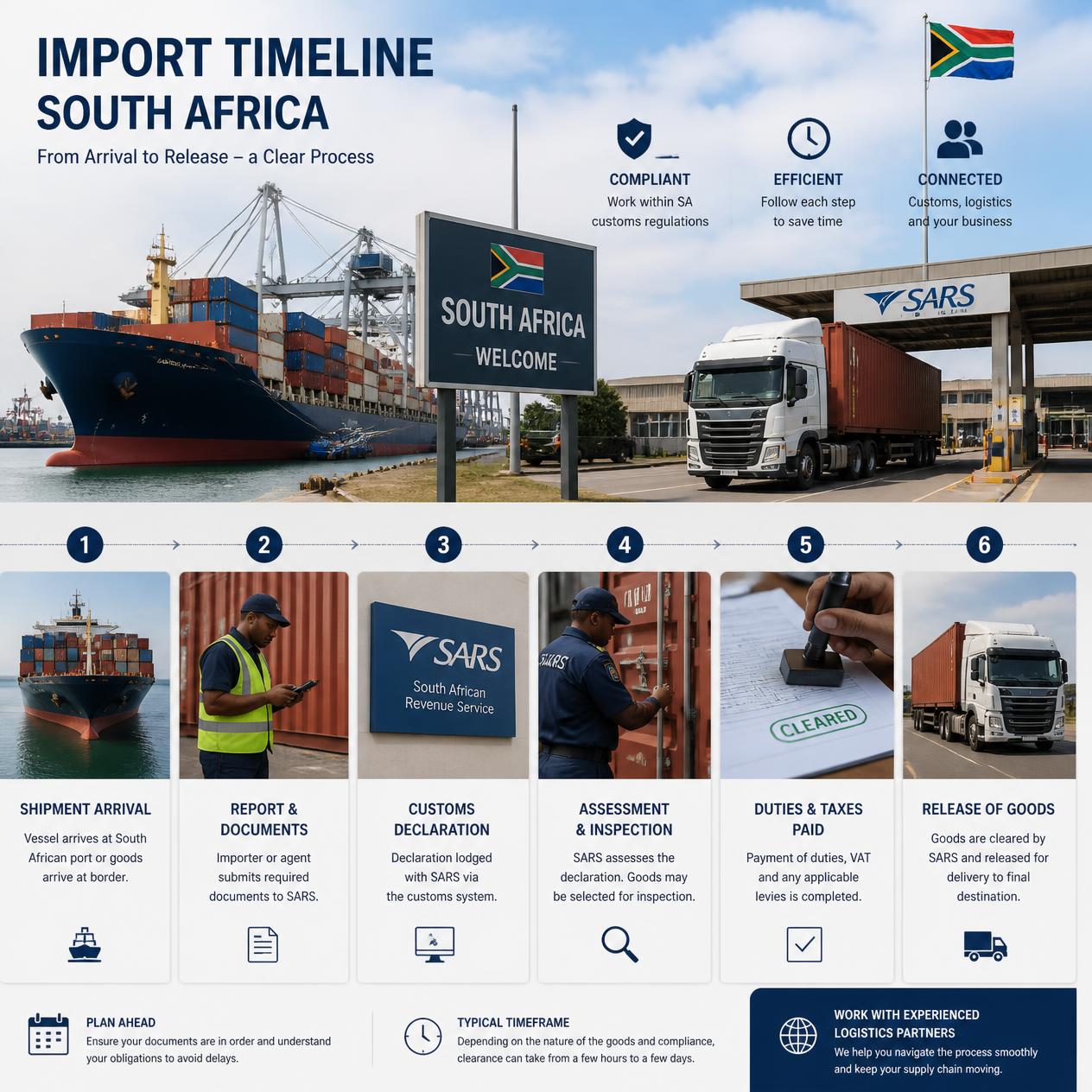
Once documentation is complete and correct, import customs clearance at a South African port typically moves quickly — but "complete and correct" is doing a lot of work in that sentence.
We give you a realistic clearance timeline based on your specific goods and documentation status, not a generic best-case estimate that falls apart the moment a permit is missing.
We give you a realistic clearance timeline based on your specific goods and documentation status, not a generic best-case estimate that falls apart the moment a permit is missing.
Who We Clear Import Shipments For
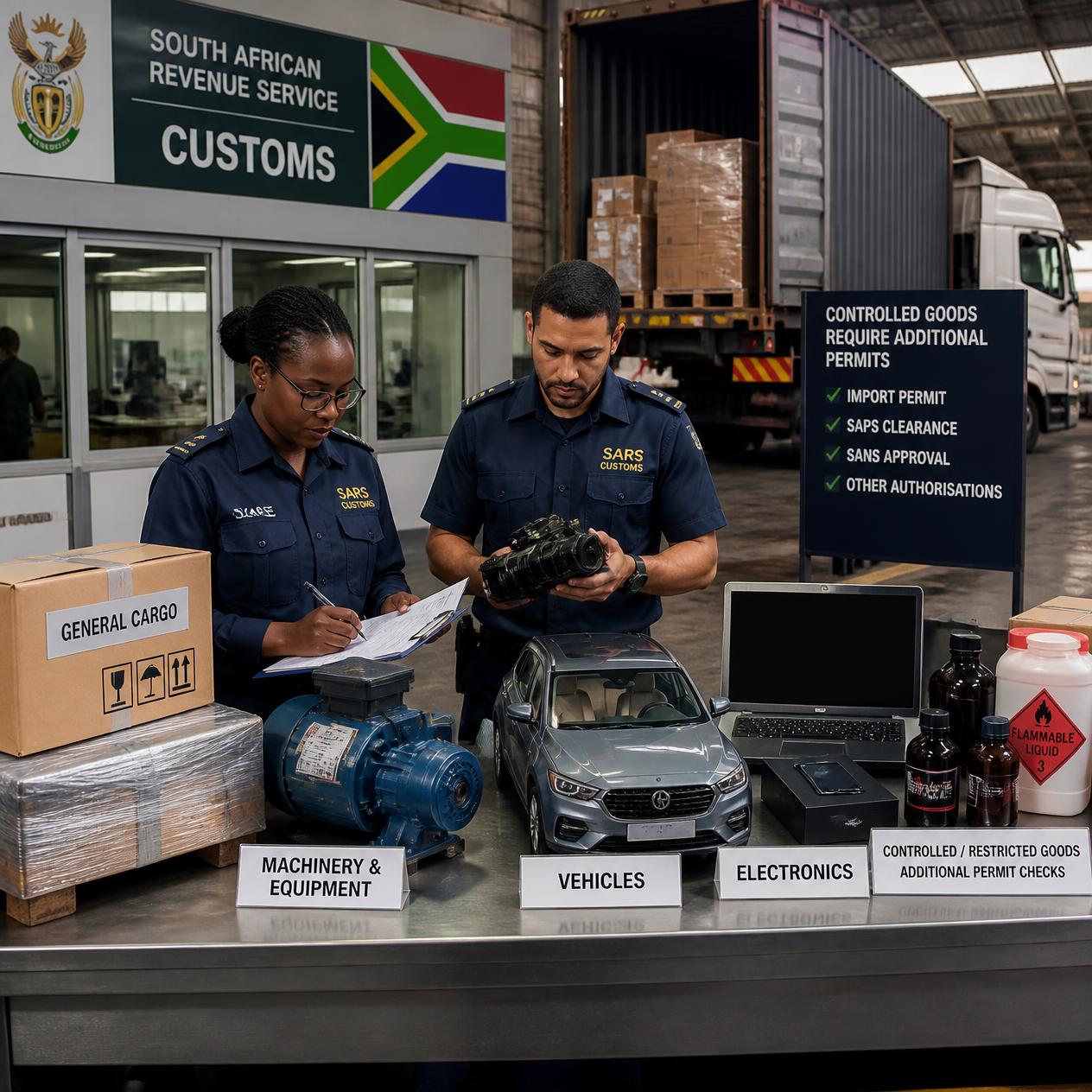
From single-container importers to businesses running regular container volumes through Durban and Cape Town, we manage import customs clearance for general cargo, machinery, vehicles, electronics, and controlled or restricted goods categories requiring additional permits.
Support for First-Time and Regular Importers Alike
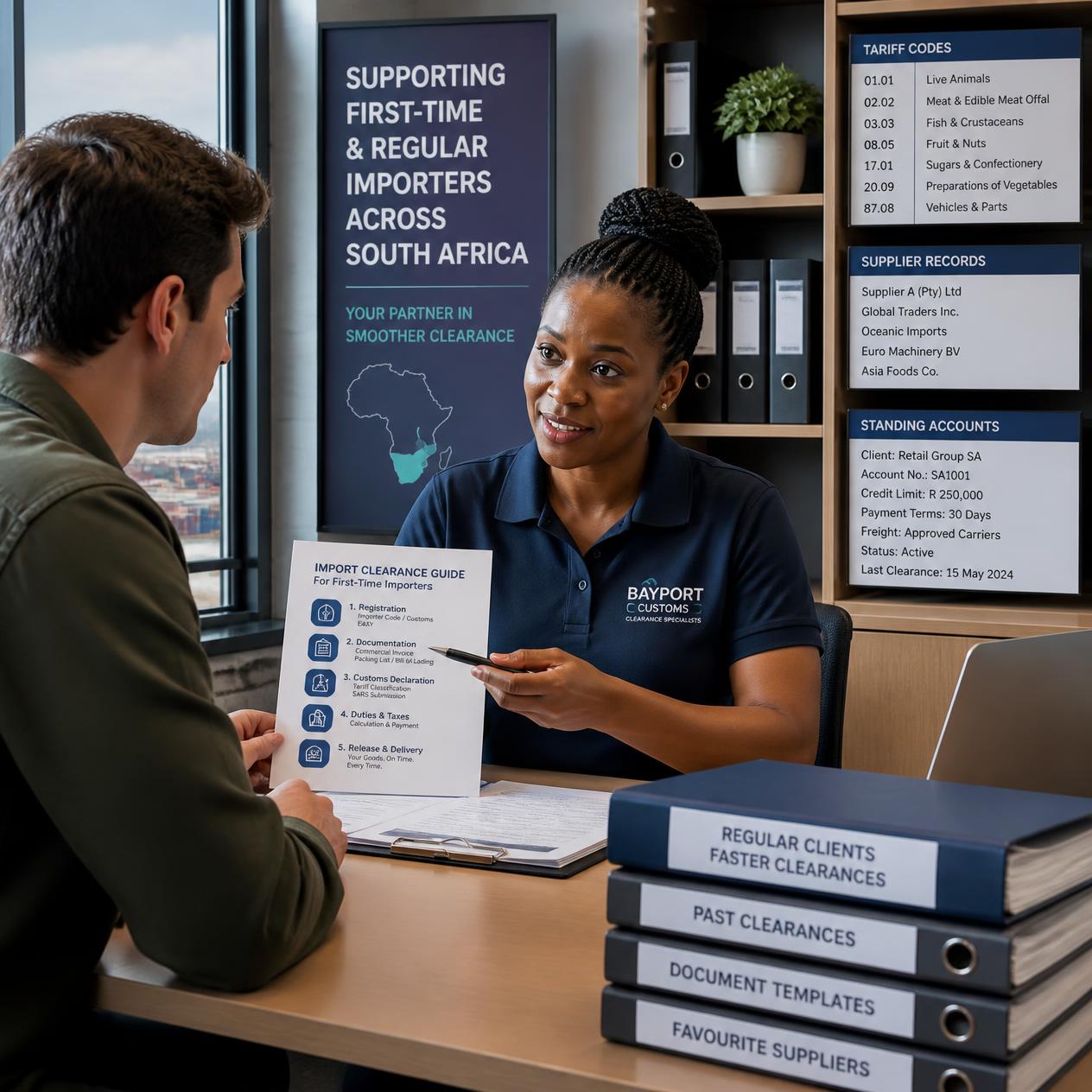
First-time importers get a full walkthrough of what SARS requires before their goods even leave the country of origin.
Regular importers benefit from a standing account setup that speeds up every subsequent import customs clearance, since tariff codes, supplier details, and typical duty treatment are already on file.
Regular importers benefit from a standing account setup that speeds up every subsequent import customs clearance, since tariff codes, supplier details, and typical duty treatment are already on file.